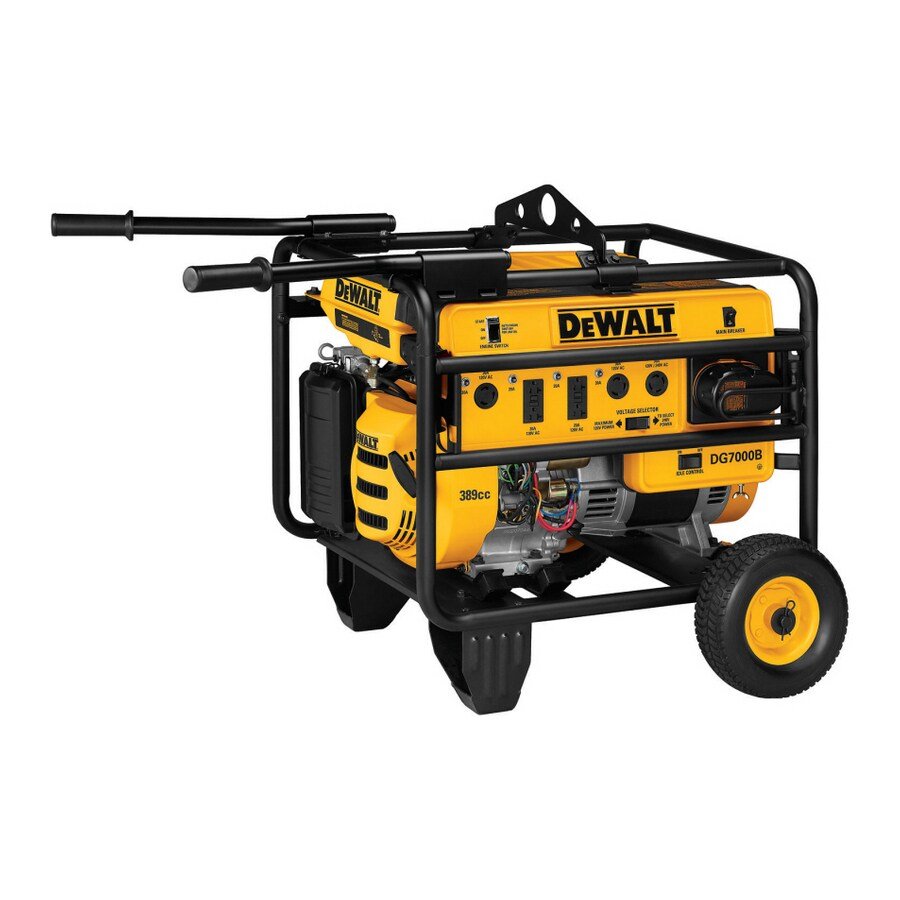
When the lights go out, the job site needs power, or your RV adventures call for reliable electricity, a 7000-watt generator often hits that sweet spot of robust capability and manageable portability. But with so many options, how do you cut through the noise? This comprehensive Choosing a 7000 Watt Generator: Buyer's Guide is here to empower you with the knowledge to make an informed decision, ensuring you pick a powerhouse that perfectly suits your needs.
At a Glance: Your 7000-Watt Generator Checklist
Before diving deep, here are the key takeaways to guide your selection:
- Power Needs: Calculate your essential running watts and account for startup (peak) watts for appliances like refrigerators or power tools.
- Fuel Type: Decide between gasoline-only, dual-fuel (gas/propane), or tri-fuel (gas/propane/natural gas) based on availability, storage, and emissions.
- Inverter Tech: If you're powering sensitive electronics (laptops, TVs), an inverter generator provides cleaner, safer power.
- Noise Level: Generators can be loud. Look for decibel ratings, especially if used in residential areas or campgrounds.
- Starting Method: Electric start or remote start add convenience over manual pull-starts.
- Safety First: Prioritize models with automatic low oil shutdown and carbon monoxide (CO) sensors.
- Portability: Consider weight, wheels, and handles if you plan to move it frequently.
Why a 7000-Watt Generator Might Be Your Perfect Power Play
So, what exactly does 7000 watts get you? This power tier is incredibly versatile. It's enough to run many essential household appliances simultaneously during a power outage—think refrigerator, freezer, sump pump, a few lights, and perhaps a window AC unit. For RVers, it can comfortably handle most RV demands, including multiple appliances. On a job site, it can power several heavy-duty tools without breaking a sweat.
We're generally talking about running watts here, which is the continuous power output. Many generators in this class will also offer a higher peak or starting watt rating, essential for the brief surge needed to kickstart motors in appliances.
Decoding Generator Lingo: Watts, THD, and More
Before we look at specific models, let's quickly clarify some common terms you'll encounter:
- Running Watts (Rated Watts): This is the continuous power a generator can supply. It's the most crucial number for determining what you can run consistently.
- Peak Watts (Starting Watts): This is the maximum power a generator can produce for a very short duration, typically needed to start motor-driven appliances (like refrigerators, air conditioners, power tools) that require an initial burst of energy.
- Total Harmonic Distortion (THD): This measures the quality of the electricity produced. High THD (above 6%) can be harmful to sensitive electronics like laptops, smartphones, and modern TVs. Inverter generators typically have a low THD (under 3%), making them safe for all your gadgets.
- OHV Engine: Stands for Overhead Valve engine, a common and efficient design for many portable generators.
- Automatic Low Oil Shutdown: A critical safety feature that turns off the generator if oil levels drop too low, preventing engine damage.
- CO Sensor: A carbon monoxide sensor is a life-saving feature that detects dangerous levels of CO gas and automatically shuts down the generator.
Essential Considerations Before You Buy: Your Buyer's Framework
Choosing the right generator isn't just about the biggest number. It's about matching features to your specific needs. Here's what to look at closely:
Power Output & Load Capacity: Calculating Your Needs
This is step one. Don't guess. Grab a pen and paper (or a spreadsheet) and list every appliance you might want to run simultaneously.
- List Your Essentials: Think refrigerator, lights, phone chargers, medical devices, sump pump, well pump, furnace fan, or specific power tools.
- Find Running Watts: Look at the appliance label or owner's manual for its running wattage.
- Account for Starting Watts: Identify motor-driven appliances (fridge, AC, saw). These have a higher starting wattage than running wattage. The difference can be significant.
- Example: A refrigerator might run at 600 watts but need 1800 watts to start. A 15,000 BTU RV AC unit might run at 1800 watts but surge to 3000-3500 watts.
- Sum It Up: Add up the running watts of all devices you want to use at the same time. Then, take the single highest starting wattage appliance and add that difference to your total running watts. The generator's running watts should comfortably cover your total, and its peak watts should handle your largest starting load.
- Quick Tip: Many manufacturers offer online wattage calculators to help you estimate.
Fuel Type & Flexibility: Gas, Dual, or Tri-Fuel?
The type of fuel your generator uses significantly impacts its convenience, run time, and emissions.
- Gasoline: Most common and readily available. However, gasoline degrades over time (especially ethanol blends) and can be less efficient than propane. Storage can also be a concern.
- Dual Fuel (Gasoline & Propane): Offers fantastic versatility. Propane (LPG) has a longer shelf life, burns cleaner, and is easily stored in tanks. You can switch between fuels, which is great for emergencies if one fuel type is scarce. Keep in mind propane typically results in slightly lower power output compared to gasoline.
- Tri-Fuel (Gasoline, Propane & Natural Gas): The ultimate in fuel flexibility. Natural gas offers an endless supply if you have a connection, eliminating the need for refueling. However, natural gas conversion usually means a power reduction, and it requires a professional hookup. This is often the most expensive option upfront but can pay off in long-term convenience.
Consider your access to each fuel type, how long you anticipate needing power, and your local regulations regarding fuel storage.
Inverter Technology: Clean Power for Sensitive Devices
This is a crucial distinction.
- Traditional (Conventional) Generators: Tend to produce "dirty" power with higher THD. They're robust for power tools, lights, and appliances without sensitive electronics.
- Inverter Generators: Utilize advanced technology to produce clean, stable power (low THD, typically <3%) that's safe for all your sensitive electronics—laptops, smartphones, smart TVs, and medical equipment. They're also generally quieter and more fuel-efficient because they can throttle engine speed based on the load. If you're planning to power anything with a microchip, an inverter is strongly recommended. For a deeper dive into Honda's offerings, you might find our Honda 7000-watt generator guide particularly insightful.
Run Time & Fuel Tank Size: Endurance Matters
How long do you need your generator to run before refueling?
- Tank Size: A larger fuel tank generally means longer run times.
- Fuel Efficiency: Inverter generators are often more fuel-efficient, especially at lower loads, extending their run time per tank.
- Load Factor: Runtime is usually quoted "at 25% load" or "at 50% load." The higher the load, the shorter the run time. Match the specified run time to your expected usage.
Noise Level: Keeping the Peace
Generators can be loud, measured in decibels (dB). For comparison:
- Normal conversation: ~60 dB
- Lawnmower: ~90 dB
- Motorcycle: ~100 dB
- Residential Areas & Camping: If you're using it where noise is a concern, look for models in the 50-65 dB range. Inverter generators are typically much quieter than conventional ones.
- Job Sites: Noise might be less of a concern, but it still impacts user comfort.
Starting Mechanisms: Ease of Use
No one wants to struggle with a pull cord during an emergency.
- Manual Recoil (Pull Start): The basic, traditional method. Reliable but can be tiring.
- Electric Start: Push a button, and it starts. A common and highly convenient feature, usually requiring a small battery.
- Remote Start: Even better—start your generator from a distance with a key fob. Ideal for cold mornings or if your generator is housed a short distance away.
Portability & Design: On the Move
If you plan to move your generator frequently, portability is key.
- Weight: 7000-watt generators can be heavy (150-300+ lbs).
- Wheel Kits & Handles: Look for sturdy, flat-free tires and comfortable, foldable handles for easy transport.
- Frame: A robust steel frame protects the engine and components.
Outlets & Connectivity: Hooking Everything Up
Ensure the generator has the right outlets for your needs.
- Standard 120V Outlets (5-20R): Your typical household outlets.
- RV-Ready Outlet (TT-30R): A 30A 120V outlet specifically for connecting to an RV.
- High-Power 240V Outlets (L14-30R or 14-50R): Needed for larger appliances or to connect to a transfer switch for home backup.
- USB Ports: Handy for charging small electronics directly.
- Safety Covers: Rubber covers protect outlets from dust and moisture.
Durability & Safety Features: Peace of Mind
These features protect your investment and, more importantly, your family.
- Automatic Low Oil Shutdown: Prevents severe engine damage. Essential.
- CO Sensor: Detects carbon monoxide buildup and shuts down the unit. A non-negotiable safety feature, especially if you're ever using it in an enclosed or partially enclosed space (though always remember: NEVER indoors).
- Circuit Breakers: Protect the generator and your connected devices from overloads.
- Cast Iron Sleeve: Indicates a more durable, longer-lasting engine.
- Rubber-Covered Outlets: Protect against moisture and debris.
Top 7000-Watt (and Nearby) Generators to Consider
Now that you know what to look for, let's explore some of the best generators in this power class, including those offering even more wattage for added flexibility.
Honda EU7000IS Inverter Portable Generator
- Key Features: Renowned for its super quiet engine (as low as 52 dB), electric start, exceptional fuel efficiency, and clean inverter power (<3% THD). It’s ideal for sensitive electronics, making it a top choice for home backup, RVs, and quiet outdoor events. Its robust 7,000 running watts are delivered reliably.
- Best For: Those who prioritize ultra-quiet operation, fuel economy, and clean power for electronics.
Gidrox 7000W Dual Fuel Inverter Generator
- Key Features: A compelling option with dual fuel operation (7000 starting watts on gas, 6300 on propane), inverter technology (<3% THD), and a respectable 3.6-gallon fuel tank providing up to 12 hours run time at 25% load. It comes with an RV adapter and a CO sensor.
- Best For: Campers, job site workers, or anyone needing emergency backup with fuel flexibility and clean power.
Westinghouse 9500 Peak Dual Fuel Home Backup Generator
- Key Features: Stepping up in power, this unit offers 7500 running watts on gasoline and 6750 on propane. It boasts an electric push-button start, a convenient remote key fob, a CO sensor, and durable rubber-covered outlets. Requires minimal assembly, getting you powered up quickly.
- Best For: Home backup where a bit more power than 7000 watts is desirable, with the convenience of dual fuel and remote start.
Westinghouse 12500 Peak Dual Fuel Home Backup Generator
- Key Features: A heavy-duty option delivering 9500 running watts on gasoline and 8500 on propane. It includes a remote electric start, a transfer switch-ready outlet for easy home integration, a CO sensor, and a robust 457cc engine with a cast iron sleeve for longevity.
- Best For: Larger home backup needs, light commercial use, or situations requiring substantial and reliable dual-fuel power.
GENMAX 10500 Peak Watt Tri Fuel Inverter Generator (GM10500XiT)
- Key Features: This compact tri-fuel inverter generator (gasoline, propane, natural gas) provides 7800 rated running watts and 10500 peak watts. It stands out with energy-saving technologies, low emissions, multiple start options (one-button, remote, recoil), and <3% THD for sensitive electronics.
- Best For: Users seeking maximum fuel flexibility, clean power, and advanced features in a portable inverter package.
Westinghouse 14500 Peak Watt Tri-Fuel Generator
- Key Features: A powerful behemoth offering 14,500 peak watts and 11,500 running watts on gasoline. It runs on gasoline, propane, and natural gas, powered by a 550cc 4-stroke OHV engine with a cast iron sleeve. Impressive runtimes include up to 19 hours on a 9.5-gallon fuel tank or 7 hours on a 20 lb propane tank, plus a built-in fuel gauge.
- Best For: Large homes, extensive job sites, or areas where tri-fuel flexibility and very high continuous power are a must.
Generac 10,000/8,000-Watt Portable Gas Generator (7715 GP8000E)
- Key Features: A reliable gas-powered generator with 10,000 peak watts and 8,000 running watts. It features Generac's PowerRush Advanced Technology for 40% more starting capacity, electric start, a durable Yamaha OHV engine, and a large steel fuel tank for up to 11 hours of runtime at 50% load.
- Best For: Those needing robust, gas-only power for home backup or heavy-duty tasks, especially where high starting power is crucial.
Westinghouse 13500 Peak Watt Tri-Fuel Generator
- Key Features: Another excellent tri-fuel option, delivering 13,500 peak watts and 10,500 running watts on gasoline. It offers remote electric start, up to 19 hours of runtime on a 9.5-gallon tank, various outlets with safety covers, a 500cc OHV engine, and crucial automatic low oil and CO shutdown, plus a digital hour meter.
- Best For: Mid-to-large home backup, where tri-fuel flexibility and extended runtimes are highly valued.
Westinghouse 12500 Peak Watt Tri-Fuel Generator
- Key Features: This tri-fuel generator provides 12,500 peak watts and 9,500 running watts on gasoline. It features a 457cc engine with a cast iron sleeve, automatic low oil and CO shutdown, up to 12 hours of runtime on a 6.6-gallon fuel tank, and multiple transfer switch and RV-ready outlets.
- Best For: Versatile home backup or RV use with tri-fuel capabilities and strong safety features.
All Power APGG10000 10,000 Watt Starting Generator
- Key Features: A solid dual fuel (gasoline and propane) generator offering 10,000 peak watts and 8,000 running watts. It includes electric start and a steel frame with wheels for good portability given its power output.
- Best For: Budget-conscious buyers needing strong dual-fuel power for emergencies or demanding tasks, without requiring inverter technology.
Setting Up and Maintaining Your Generator
Buying is only the first step. Proper setup and maintenance ensure your generator is ready when you need it most.
- Read the Manual: Seriously, every generator is a little different.
- Location, Location, Location: Always operate your generator outdoors, at least 20 feet away from your home, with the exhaust pointing away from doors and windows. Carbon monoxide is odorless and deadly.
- Fuel Storage: Store fuel safely in approved containers. Stabilize gasoline if storing long-term.
- Oil Checks: Check oil levels before each use. Change oil according to the manufacturer's schedule.
- Test Runs: Run your generator under a light load for 15-20 minutes every month or two. This keeps parts lubricated and ensures it will start when needed.
- Battery Maintenance: If it has an electric start, keep the battery charged (many have a trickle charger).
- Safety Gear: Keep a fire extinguisher nearby.
Common Generator Questions Answered
Can a 7000-watt generator run a whole house?
It depends on the house and your definition of "whole." A 7000-watt generator can run essential circuits in most homes—refrigerator, freezer, lights, furnace fan, well pump, and perhaps a small window AC. It won't typically run central air conditioning, electric ranges, or multiple heavy appliances simultaneously. For true whole-home power, you often need 15,000+ running watts and a properly installed transfer switch.
What's the best fuel for a generator?
There's no single "best."
- Gasoline is widely available but has a shorter shelf life.
- Propane stores indefinitely, burns cleaner, but often has slightly lower power output.
- Natural Gas offers unlimited supply if connected, but requires a professional hookup and has the lowest power output.
Your choice depends on availability, storage capacity, and power needs.
How loud is 70 dB?
70 dB is roughly equivalent to a vacuum cleaner running or a normal conversation at 3 feet. It's noticeable and can be disruptive in quiet environments like campgrounds or residential areas, especially for prolonged periods. For quieter operation, aim for 60 dB or less.
Do I need a transfer switch?
For home backup, a transfer switch is highly recommended, if not required by code in some areas. It safely isolates your home's electrical system from the utility grid, preventing backfeeding (which can injure utility workers) and making it easy to switch between utility and generator power.
Making Your Final Choice: Empowering Your Decision
Choosing a 7000-watt generator isn't just about buying a machine; it's about investing in peace of mind, convenience, and preparedness. By carefully assessing your power requirements, considering fuel flexibility, prioritizing safety features, and balancing noise levels with budget, you can confidently select a generator that will serve you faithfully for years to come.
Take your time, compare the featured models against your personalized checklist, and envision how you'll use it. With the right generator by your side, you'll be ready for whatever comes your way.