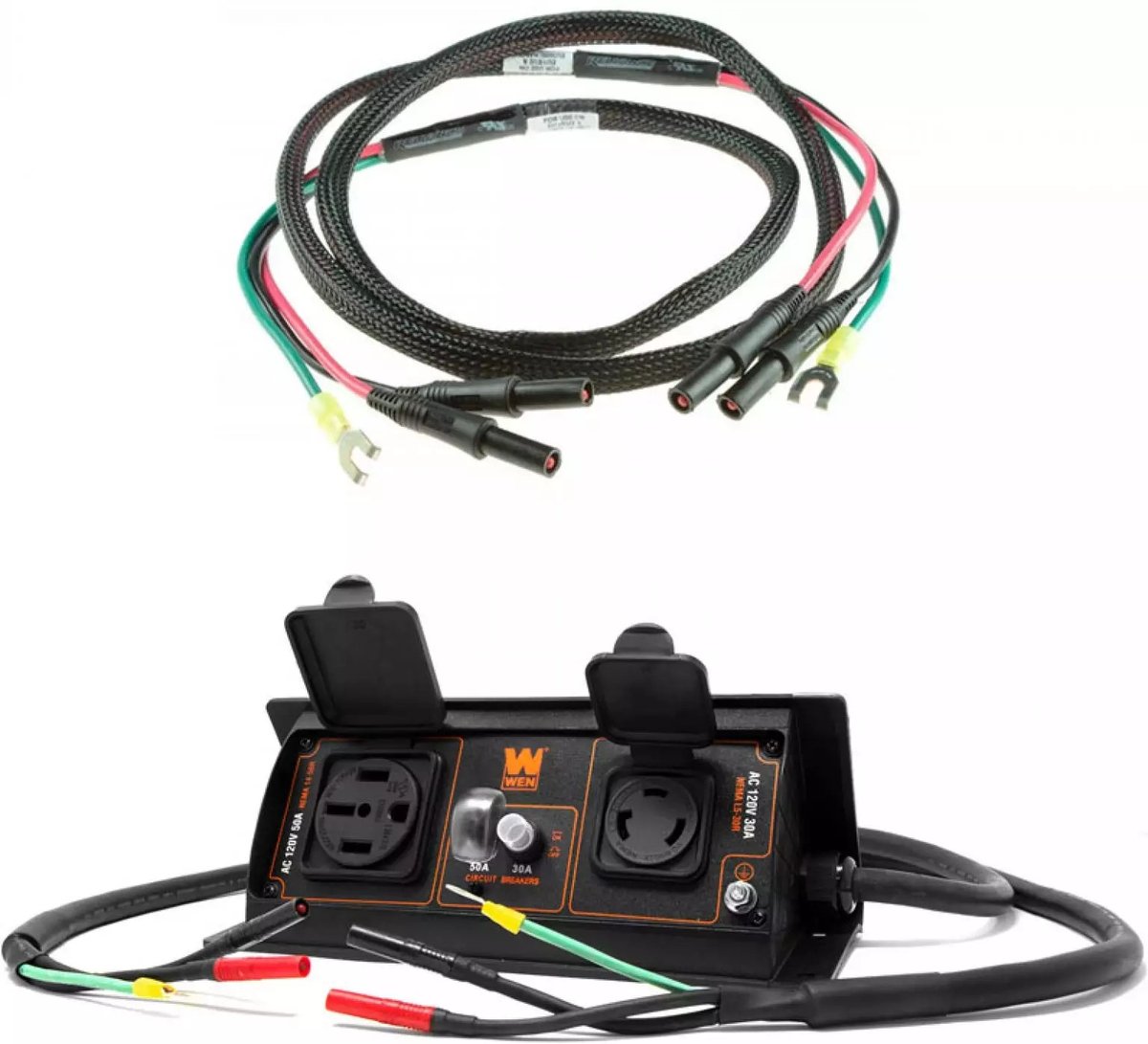
When the lights go out, your portable generator isn't just a machine; it's a lifeline. But to truly unlock its potential—ensuring optimal performance, maximizing longevity, and, most critically, operating it safely—you need more than just the generator itself. Understanding Generator Accessories & Setup Essentials isn't merely about convenience; it's about preparedness, efficiency, and peace of mind. Without the right gear and know-how, even the most powerful generator can fall short of expectations or, worse, become a hazard.
This comprehensive guide will walk you through the indispensable accessories and crucial setup considerations, transforming your generator from a simple power source into a robust, reliable backup system.
At a Glance: Your Generator Essentials Checklist
- Manufacturer-Supplied Accessories: Prioritize these for guaranteed compatibility, safety, and warranty protection.
- Mobility Aids: Wheel kits and lifting kits make moving heavy generators manageable.
- Heavy-Duty Extension Cords: Essential for safe operation at least 20 feet from your home.
- Electrical Adapters: Ensure all your appliances can connect.
- Transfer Switch: A must-have for safely powering your home's circuits.
- Monitoring Tools: Hour meters for maintenance, clamp meters for power management.
- Fuel Stabilizer: Crucial for preserving fuel and extending engine life, especially for infrequent use.
- Storage & Running Covers: Protect your investment from dust and enable safe operation in bad weather.
- Safety First: Always operate generators outdoors; never use exhaust extensions.
Why Official Accessories Matter: Compatibility, Safety, and Warranty
Before we dive into specific accessories, let's establish a foundational rule: always prioritize official manufacturer-supplied accessories. This isn't just a marketing ploy; it's a critical safety and performance recommendation.
When you stick to components designed and tested by your generator's manufacturer, you eliminate guesswork about compatibility. These accessories are engineered to integrate seamlessly with your unit, preventing electrical mismatches, mechanical strains, or fit issues. More importantly, manufacturer-supplied items meet rigorous safety standards, often exceeding those of generic third-party alternatives. Using unapproved accessories, particularly those involving hardware modifications, could lead to unexpected failures, potential safety hazards, and almost certainly void your generator's warranty. Think of it as investing in an ecosystem designed to work flawlessly together.
Getting Your Generator Mobile: The Right Moves
Portable generators, especially those with higher wattage, can be hefty. Moving a 150-pound machine by hand is a quick way to strain your back. Thankfully, several accessories make transportation a breeze, whether you're rolling it across the yard or hoisting it onto a truck.
Wheel Kits: Effortless Horizontal Movement
Most generators weighing over 110 pounds already come with a wheel kit, and for good reason. If yours doesn't, or if you're struggling to maneuver your unit, investing in a good quality wheel kit is a game-changer. These kits typically include 2-4 sturdy wheels, often pneumatic, and a folding handle for easy pulling or pushing. They transform a cumbersome stationary object into a surprisingly agile piece of equipment, allowing you to easily roll it from storage to its operating location. You can expect to spend between $30 and $150 for a reliable kit, a small price for significant convenience and injury prevention.
Lifting Kits and Hanger Kits: For Vertical Mobility
While wheel kits handle horizontal movement, sometimes you need to move your generator vertically. This is where lifting kits or hanger kits come in. These usually consist of a steel crossbar that attaches securely to the generator frame, providing a central point for lifting. They're invaluable for situations requiring crane transport, loading onto high truck beds, or moving generators in industrial settings. Priced modestly at $20-$50, they're a niche but essential accessory for those with specific transport needs.
Powering Up Safely: Adapters, Cords, and Electrical Management
Once your generator is in place, the next step is connecting it to your appliances or even your home. This involves a critical understanding of electrical connections, safety protocols, and smart power distribution.
Adapters: Bridging the Connection Gap
Generators often feature a variety of specialized outlets, like twist-lock receptacles, which might not match the standard plugs on your everyday appliances or RV. Adapters are the simple solution. They allow you to connect different plug types to your generator's specific outlets. For RV owners, common adapters include L5-30P to TT-30R (converting a 30-amp twist-lock to a standard RV receptacle) or L14-30P to 14-50R (for higher amperage RV needs). Costing around $20, these small but mighty accessories ensure you can access all the power your generator has to offer without rewiring or cutting corners.
Heavy-Duty Extension Cords: Reaching Safely
This is a non-negotiable item. You simply cannot operate a portable generator indoors or directly adjacent to your home. Carbon monoxide poisoning is a silent killer, and the only safe operating location is outdoors, at least 20 feet away from any doors, windows, or vents. This distance necessitates robust extension cords.
When selecting extension cords, "heavy-duty" is the keyword. Opt for cords with a 10- to 12-gauge thickness (lower gauge numbers mean thicker wire, capable of carrying more current). This prevents overheating and power loss over distance. Ensure the cord length is sufficient to maintain the 20-foot safety buffer, with options ranging from 2 to 100 feet. While they can cost anywhere from $50 to $200, a high-quality, properly rated extension cord is a must-have for safe and effective generator use. Skimping here isn't just inefficient; it's dangerous.
Bonding Plugs (Edison Plugs): Advanced Electrical Nuances
For most casual generator users, a bonding plug isn't necessary. However, for those with a deeper understanding of electrical systems, particularly when using certain electrical protection products that expect a neutral-to-ground bond, an Edison plug can be useful. Portable generators often operate with a "floating neutral," meaning the neutral wire isn't bonded to the frame or ground. This is perfectly safe for typical direct appliance connection. However, some advanced electrical equipment or GFCI outlets might trip or give "open ground" readings if they expect a bonded neutral. A bonding plug (costing under $20) creates this bond, ensuring compatibility with such devices. It's a specific tool for a specific need, mainly for advanced users.
Parallel Kits: Doubling Down on Power
Imagine you have two smaller inverter generators, and you need more power than one can provide, but not so much that you need a single, much larger, and heavier unit. This is where parallel kits shine. These kits allow you to link two compatible inverter generators together to combine their output, effectively doubling your available wattage (or at least increasing it significantly, limited by the kit's capacity).
This offers incredible flexibility: you can run one generator for smaller power needs or link them up for major tasks. Always use first-party parallel kits designed for your specific generator models to guarantee compatibility and safe operation. These kits typically range from $50 to $100 and are a smart investment for those who value scalable power solutions.
Transfer Switches: Seamless Home Integration
If your goal is to power essential circuits in your home during an outage, a transfer switch isn't just an accessory; it's a mandatory safety device. Installing a transfer switch allows you to safely connect your portable generator to your home's electrical system, letting you switch your house between grid power and generator power.
Crucially, a transfer switch prevents backfeeding. Backfeeding is when generator power flows back into the utility grid, posing a severe electrocution risk to utility workers who might be repairing lines. Manual transfer switches require you to manually start your generator and flip a switch to transfer power. Automatic Transfer Switches (ATS) automatically detect power outages, but most portable generators don't support ATS auto-startup, meaning you'll still need to manually start the generator before the ATS takes over. While more of a home equipment upgrade than a portable accessory, a basic 30-amp manual transfer switch can cost several hundred dollars, but it's an indispensable investment for whole-house backup power.
Staying on Top: Monitoring and Maintenance Must-Haves
Just like your car, a generator needs regular monitoring and maintenance to run efficiently and reliably. These accessories help you keep tabs on its health and performance.
Clamp Meters: Your Generator's Data Center
Does your generator have a fancy digital data center displaying voltage, frequency, and current? If not, a clamp meter (also known as a voltmeter or current tester) is a must-have. This handheld device allows you to measure the generator's output at its sockets and the actual power consumption of your connected appliances.
Understanding your generator's output and your load requirements helps prevent overloading and ensures you're using your power efficiently. It lets you determine starting watts and running watts for various devices. Priced around $50, a clamp meter is an invaluable diagnostic tool that empowers you to manage your power effectively.
Vibration-Activated Hour Meters: Timely Tune-Ups
Generator maintenance schedules are typically based on runtime hours (e.g., oil change every 50 hours). If your generator doesn't have a built-in hour meter, a vibration-activated one is a simple and effective solution. These small devices attach to the generator's frame and automatically track runtime whenever the engine is operating. Costing around $15, an hour meter takes the guesswork out of maintenance, ensuring you perform oil changes, spark plug replacements, and filter cleanings precisely when needed, extending your generator's lifespan significantly.
Extended-Run Fuel Tanks: Going the Distance
For prolonged outages, refilling your generator's small integrated fuel tank every few hours can be a hassle. Extended-run fuel tanks provide a much larger fuel supply, significantly increasing runtime. The simplest versions are gravity-fed tanks that sit higher than your generator and slowly refill its internal tank. These basic tanks start at around $100.
However, be wary of more advanced systems involving pumps or modifications to your generator's fuel lines. Manufacturers strongly advise against these, as they often involve modifying the carburetor, which can void your warranty and compromise emission ratings. Stick to simple, gravity-fed systems that don't require intrusive modifications.
Fuel Stabilizers: Preserving Your Power
For many, a generator sits idle for long periods, only springing to life during emergencies. This intermittent use is where fuel stabilizer becomes highly recommended. Gasoline, especially ethanol-blended varieties, can degrade over time, leading to gum and varnish buildup that clogs carburetors and fuel lines.
A quality fuel stabilizer prevents this degradation, protecting your carburetor and ensuring your generator starts reliably when you need it most. It's a cheap insurance policy for your engine's longevity, costing just a few dollars per bottle. Always keep some on hand and add it to your fuel tank before storing the generator for any extended period.
Magnetic Oil Dipsticks: Engine Health in a Snap
Small engines, like those found in portable generators, often lack oil filters. This means tiny metal shavings, byproducts of normal engine wear, can circulate in the oil, accelerating wear. A magnetic oil dipstick is a simple, inexpensive solution (around $15-$20) that replaces your standard dipstick. Its powerful magnet attracts and holds these metallic particles, keeping them out of circulation and significantly reducing internal engine wear. It's a highly recommended upgrade, especially for new generators or those without oil filters, and it provides a quick visual check of engine health.
Maintenance Kits: All-in-One Convenience
Especially for first-time generator owners, a comprehensive maintenance kit can be a convenient starting point. These kits typically bundle essential consumables like spark plugs, air filters, oil filters (if applicable), engine oil, and sometimes cleaning equipment. They simplify the process of gathering necessary parts for routine servicing. After your initial purchase, you might find it more cost-effective to resupply individual components as needed, unless the kit continues to offer superior value. These kits generally range from $30-$70.
Consider a robust generator like the Honda 7000 watt generator—even top-tier models benefit immensely from diligent maintenance practices supported by these tools.
Shielding Your Investment: Protection and Environmental Adapters
Your generator works hard for you. In return, it deserves protection from the elements and specific environmental challenges.
Storage Covers: Simple Dust Protection
When not in use, your generator is susceptible to dust, dirt, and general garage grime. A storage cover is a basic, affordable accessory (typically $10-$30) that all generator owners should have. While it won't protect against rain or allow operation, a model-specific cover provides a snug fit and keeps your unit clean, extending the life of its external components. Remember, these covers are only for storage and must be removed before operating the generator to prevent overheating and fire hazards.
Storm Covers (Running Covers): Power Through Any Weather
What happens if an outage hits during a rainstorm, snow, or high winds? You can't run your generator uncovered, as water can damage electrical components and pose an electrocution risk. A storm cover, also known as a running cover, is a heavy-duty, water-resistant or waterproof enclosure designed to allow safe generator operation in adverse weather.
These covers typically feature a sturdy frame or backbone that creates a canopy over the generator, allowing for proper airflow and exhaust clearance while shielding the electrical outlets and engine from precipitation. They are a highly recommended investment for anyone living in an area prone to bad weather, costing between $150 and $200.
Cold Weather Kits: Beating the Freeze
Operating a generator in freezing temperatures can present unique challenges. A common issue is water condensation freezing in the crankcase breather tube, which can lead to engine damage. Cold weather kits are designed to prevent this problem. They often include a heating coil that warms critical engine components, ensuring proper lubrication and preventing freeze-ups. If you live in a region with consistently freezing winters and rely on your generator, a cold weather kit (ranging from $100-$300) is a recommended adaptation to ensure reliable starts and operation.
Altitude Kits: Peak Performance at Elevation
If you live or frequently operate your generator at high altitudes (typically above 2,000 feet), you'll notice a drop in performance. The thinner air at elevation means less oxygen for combustion, leading to an overly rich fuel mixture and reduced power output. Altitude kits address this by providing a set of carburetor jets that are specifically sized to adjust the fuel-to-air ratio for optimal performance at higher elevations.
While these kits only cost a few dollars, it's important to note that modifying the carburetor to install new jets can sometimes void your generator's warranty. Always check with your manufacturer before making such modifications. For consistent high-altitude use, however, they can restore significant power.
Accessories to Avoid (and Why): Don't Risk It
Just as there are essential accessories, there are others that are either unsafe, unreliable, or can cause more harm than good. These are best avoided.
Remote Start Kits: Consider Built-In Options
For electric-start generators that don't come with a remote start feature, third-party remote start kits are available. These promise the convenience of starting your generator with a button press from a distance. However, they typically require significant modifications to your generator's wiring and control systems. Such alterations are often complex, can introduce reliability issues, and, most importantly, will almost certainly void your manufacturer's warranty. Unless you are an advanced user with electrical expertise and are fully aware of the risks, it's far safer and more reliable to purchase a generator that includes remote start as a factory-installed feature from the outset. Expect these kits to cost $200-$500 plus installation.
Fuel Conversion Kits: Safety, Warranty, and Emissions
These third-party kits promise to convert a gasoline-only generator into a dual-fuel (gasoline and propane) or tri-fuel (gasoline, propane, and natural gas) unit. While the idea of fuel flexibility is appealing, these kits are fraught with problems. They involve significant modifications to the fuel system and carburetor, which:
- Void Warranties: Manufacturers do not support these conversions.
- Violate Emission Regulations: The engine is no longer operating within its certified parameters.
- Risk Engine Damage: Incorrect fuel delivery can cause premature wear or catastrophic failure.
- Pose Safety Hazards: Tampering with fuel lines and carburetors can lead to leaks and fire risks.
Our strong advice: do not use fuel conversion kits. If you need multi-fuel capability, buy a generator specifically designed and manufactured as a dual-fuel or tri-fuel unit.
Silencers/Mufflers: Choose a Quieter Generator Instead
The noise from a portable generator can be a significant nuisance. Some third-party accessories claim to reduce noise by modifying the exhaust system. However, these "silencers" or "mufflers" are generally ineffective at significantly reducing overall engine noise and often introduce new problems. They can restrict exhaust flow, leading to back pressure, reduced engine efficiency, and potentially overheating. Like fuel conversion kits, these modifications will void your warranty. If noise is a primary concern, your best course of action is to invest in an inverter generator, which is inherently much quieter, or to consider a purpose-built soundproof enclosure designed for generators.
Exhaust Extensions: The Deadly Mistake
This cannot be stressed enough: NEVER use exhaust extensions to run a generator indoors or in partially enclosed spaces. This is one of the most dangerous, life-threatening mistakes you can make. Exhaust extensions are tempting for those who want to run a generator in a garage or shed, routing the exhaust fumes outside. However, even with an extension, carbon monoxide (CO) gas can leak from connections, the engine itself, or be drawn back inside through windows and vents. Carbon monoxide is odorless, colorless, and deadly. Always, always, always operate your generator outdoors, at least 20 feet from your home, with the exhaust pointed away from any buildings. There is no safe way to run a portable generator indoors.
Your Generator Setup Checklist: Ready for Anything
Having the right generator accessories is only half the battle; knowing how to set up and use your generator safely and effectively is paramount. As you prepare for the next power outage, take a moment to review this checklist:
- Generator Placement: Is it at least 20 feet from your home, with exhaust pointed away from any structures, windows, or vents?
- Fuel Supply: Do you have fresh fuel, properly stabilized, and enough for extended operation?
- Oil Levels: Have you checked the oil? Is it at the correct level and recently changed (using your hour meter as a guide)?
- Extension Cords: Are they heavy-duty (10- or 12-gauge), appropriately long, and free from damage?
- Adapters: Do you have the correct adapters for all your essential appliances?
- Transfer Switch: If powering your home, is your transfer switch correctly installed and understood?
- Weather Protection: If bad weather is expected, is your running cover in place?
- Safety Gear: Do you have a working carbon monoxide detector in your home? This is your ultimate backup for CO safety.
- Read the Manual: Reacquaint yourself with your generator's specific operating and maintenance instructions.
By equipping yourself with the right Generator Accessories & Setup Essentials and adhering to strict safety protocols, you're not just buying peace of mind; you're investing in reliable, safe power that will serve you well when you need it most. Stay prepared, stay safe, and keep the power flowing.