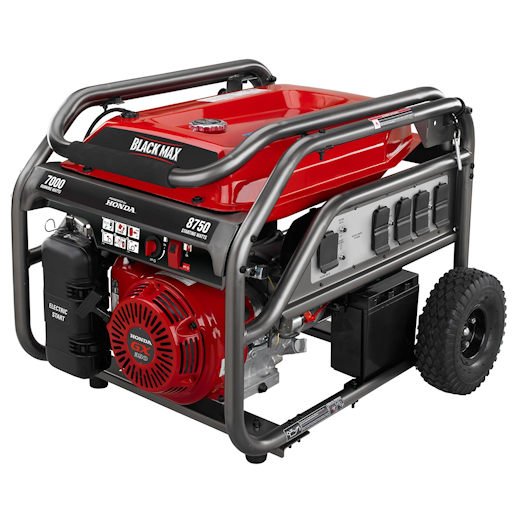
When the lights go out, or you're dreaming of a fully powered off-grid adventure, the first question that often sparks is, "What kind of generator do I need?" For many homeowners, a 7000-watt generator hits a sweet spot, offering robust power without the bulk or cost of industrial units. Understanding the practical applications of a 7000-watt generator isn't just about listing appliances; it's about strategizing how you keep your world running when the grid isn't cooperating.
This isn't about mere survival; it's about maintaining comfort, productivity, and peace of mind during outages or empowering remote work and leisure. Let's pull back the curtain on what this powerhouse can truly deliver for your home.
At a Glance: What a 7000-Watt Generator Can Do For You
- Powers Essential Home Appliances: Easily handles refrigerators, freezers, microwaves, TVs, lights, and phone chargers.
- Manages Multiple Demands: Can run several large items simultaneously, like a fridge, coffee maker, and a well pump.
- Tackles Bigger Jobs: Capable of powering sump pumps, most air compressors, some heat pumps, and even smaller welders.
- Supports Limited Cooling: Can typically operate a 10,000 BTU window air conditioner.
- Requires Careful Planning: Understanding running vs. starting watts is crucial to avoid overload.
- Safety First: Proper setup, transfer switches, and load management are non-negotiable for safe operation.
The 7000-Watt Sweet Spot: Why It Matters for Home Power Needs
Picture this: a storm rolls in, the power flickers, then darkness. Or perhaps you're building a cabin far from any utility pole. In scenarios like these, a generator moves from a luxury to a necessity. While smaller generators might handle a few lights and a phone, and larger ones can power an entire small house with ease, most average homes find their ideal balance in the 5,000 to 7,000-watt range. A 7000-watt generator, specifically, is considered a higher-tier option within this segment, giving you significant versatility and the ability to run numerous appliances, often simultaneously.
It's about bridging the gap between basic functionality and substantial comfort. With 7000 watts at your disposal, you're not just keeping the lights on; you're often keeping dinner warm, clothes drying, and even maintaining a comfortable temperature in part of your home. This capability makes it a strong contender for both emergency backup and recreational power needs.
Decoding Watts: Running vs. Starting Power – The Key to Generator Sizing
Before you even think about plugging anything in, you need to understand the two critical types of power every appliance demands:
- Continuous Power (Running Watts): This is the power your device needs to operate normally, hour after hour. Think of it as the steady hum your refrigerator maintains.
- Peak Power (Startup Watts): This is the extra surge of power a device demands for a brief moment when it first turns on, or when a motor kicks into high gear. Your fridge, for instance, needs a burst of power to get its compressor going—much more than it needs to simply keep things cold.
Ignoring peak power is a common pitfall that can quickly lead to an overloaded generator, causing it to shut down or, worse, sustain damage. Always account for these brief power spikes when planning your setup.
The Power Math: Precisely Calculating Your Home's Generator Needs
To truly determine if a 7000-watt generator is the right fit for your specific requirements, you need to do a little homework. It's not rocket science, but it does require accuracy.
Here's the step-by-step process to calculate your total wattage requirements:
- List Your Essentials: Grab a pen and paper (or a spreadsheet) and list every single appliance and tool you might want to run during an outage or off-grid scenario. Be realistic but also comprehensive.
- Find Their Wattages: For each item on your list, research its running watts and starting watts. This information is usually found on a sticker on the appliance itself, in its user manual, or with a quick online search for the specific model.
- Sum the Running Watts: Add up the running watts for all the devices you plan to power simultaneously. This gives you your baseline continuous power demand.
- Identify the Biggest Starter: Look at your list of starting watts. Find the single device that requires the highest amount of starting power. This is your "peak surge" device.
- Calculate Total Required Watts: Add your total running watts (from step 3) to the highest single starting wattage (from step 4).
- Formula: (Sum of All Running Watts) + (Highest Single Appliance Starting Watts) = Minimum Generator Size Required
Let's walk through an example:
Suppose you want to power these items: - Phone charger: 10W running / 10W startup
- TV: 100W running / 100W startup
- Radio: 100W running / 100W startup
- Computer (laptop): 300W running / 300W startup
- Refrigerator: 600W running / 2200W startup
Calculation:
- Total Running Watts: 10W (charger) + 100W (TV) + 100W (radio) + 300W (computer) + 600W (refrigerator) = 1,110 Running Watts
- Highest Single Starting Watts: The refrigerator dominates here at 2,200 Starting Watts.
- Minimum Generator Size: 1,110 Running Watts + 2,200 Starting Watts = 3,310 Watts
In this example, a 7000-watt generator would easily handle these items with plenty of headroom. This headroom is invaluable, allowing for other appliances to be added or for the generator to run more efficiently without constantly maxing out.
What a 7000-Watt Generator Truly Powers: Beyond the Basics
Now that you understand the mechanics, let's get into the exciting part: what can a 7000-watt generator actually do? This power level is incredibly versatile, pushing beyond just essentials to offer a surprising degree of comfort and utility.
Essential Home Comforts & Kitchen Must-Haves
A 7000-watt generator effortlessly takes care of your day-to-day basics, ensuring life doesn't grind to a halt during an outage.
- Refrigerators & Freezers: Keep your food from spoiling. A typical fridge runs at 600W but can surge to 2200W at startup. A 7000W unit handles this with ease.
- Microwave Oven: Heat up meals. Many microwaves operate between 600W and 1500W.
- Coffee Machine: Get your morning brew, typically 800W-1500W.
- Lighting: Keep multiple rooms lit with a combination of LED and incandescent bulbs (e.g., 60W per bulb).
- Entertainment & Communication: Power your TV (100W), laptop (300W), phone chargers (10-20W), and even a radio (100W) or Wi-Fi router.
- Sump Pump: Crucial for preventing basement flooding during storms, requiring around 800-1500 running watts and potentially 2000-3000 starting watts.
Stepping Up to Larger Demands: Appliances That Make Life Easier
The generous wattage of a 7000W generator allows you to bring more substantial appliances into the fold, significantly enhancing your quality of life during a power disruption.
- Electric Clothes Dryer: While it might not run on high heat for hours, a 7000W unit can typically power a dryer, which often demands 3000-5000 watts. You'd likely need to cycle other high-demand appliances.
- Hot Water Heater (Small/Medium): Smaller electric water heaters might be manageable, but larger ones can be power hogs. A 7000W generator could handle some models, especially if you're mindful of other loads.
- Vacuum Cleaner: Keep your home tidy, with vacuums typically drawing 1000-1500 watts.
- Electric Drill/Power Tools: Essential for repairs or projects, a drill might need 600-1000 watts.
- Multiple Devices Simultaneously: This is where the 7000W really shines. Imagine running your refrigerator, a few lights, charging your phone, and making coffee, all at the same time.
Handling the Heavy Hitters: Tools and Specialized Equipment
For those with specific needs, a 7000-watt generator can be a game-changer for workshop tasks or critical home systems.
- Welders: Many common welders, especially smaller stick or MIG units, require around 6000 peak watts, making them suitable for a 7000W generator.
- Air Compressors: Critical for workshops or inflating tires, most air compressors need around 4500 starting watts. A 7000W unit is well-equipped for this.
- Heat Pumps: Smaller and medium-sized heat pumps often have starting wattages around 4500W, falling comfortably within the generator's capacity.
- Well Pumps: If you rely on a well for water, a 1/3 HP well pump typically requires about 2200 starting watts. A 7000W generator can easily keep your water flowing.
The AC Question: Window Units vs. Central Air
This is a frequent point of confusion, and the distinction is vital.
- Window Air Conditioners: A 7000-watt generator can generally run a 10,000 BTU window air conditioner, which typically requires around 2200 starting watts. This means you can cool a key room during a heatwave.
- Central Air Conditioners: This is where 7000 watts often meets its limit. A single, very large central air conditioning unit can demand massive surge power. For example, a 3-ton central air conditioner might require around 6750 starting watts (with 2250 running watts). While close, this pushes a 7000-watt generator to its absolute maximum, especially factoring in potential power loss over extension cords or transfer switches. It’s generally advised to aim for a larger generator if consistent central AC is your primary concern.
In summary, for a combination of essential appliances, kitchen conveniences, some heavy-duty tools, and even a window AC unit, a 7000-watt generator offers impressive capabilities. It's a robust solution for a wide array of power needs. For those looking at reliable options, considering a Honda 7000 watt generator might be a good starting point, as they're often recognized for their performance and durability.
Maximizing Your 7000-Watt Generator's Efficiency and Lifespan
Having a powerful generator is only half the battle; knowing how to use it safely and efficiently is just as important. These practices ensure your generator performs optimally and lasts for years.
Capacity Management: The 85%-90% Rule
Think of your generator like a marathon runner, not a sprinter. While it can hit 7000 watts, constantly pushing it to its absolute maximum capacity (100%) can lead to premature wear and tear, reduced fuel efficiency, and potential damage.
Best practice: Aim to operate your generator at 85%-90% of its rated capacity. For a 7000-watt generator, this means keeping your total load (running watts + highest starting surge) around 5950-6300 watts. This leaves a crucial buffer, allowing the engine to work comfortably without straining.
The Smart Startup Sequence: Power Up Like a Pro
To prevent overwhelming your generator with sudden power demands, follow this simple sequence:
- Start Unloaded: Always start your generator without anything plugged into it. Allow it a minute or two to warm up and stabilize.
- Plug in High-Demand Devices First: Begin by plugging in and starting the appliance with the highest starting wattage (e.g., your refrigerator). Let it run and stabilize.
- Add Lower-Demand Devices Gradually: Once the first high-demand item is running smoothly, proceed to plug in and start your other appliances, moving from those with higher running/starting watts to the lowest (e.g., microwave, then TV, then lights, then phone chargers). This staggered approach prevents all devices from drawing peak power simultaneously.
Essential Accessories and Connection Methods
Connecting your generator to your home's electrical system requires more than just extension cords.
- Heavy-Duty Extension Cords: Always use outdoor-rated, appropriately gauged extension cords. Thin cords can overheat and cause power loss or fire hazards.
- Distribution Plugs/Power Strips: For multiple lower-wattage devices, a high-quality, surge-protected power strip can be useful, but always ensure the total draw doesn't exceed the generator's outlet capacity or the strip's rating.
- Transfer Switch or Appropriate Adapters: For safely powering your entire home's critical circuits, a manual or automatic transfer switch is highly recommended, and in many areas, required by code. This device safely disconnects your home from the utility grid before connecting it to your generator, preventing dangerous backfeed into the power lines (which can injure utility workers). Alternatively, for select circuits, appropriate generator adapters can be used with a generator-ready inlet box, but these also require careful setup and adherence to electrical codes.
Safety First: Non-Negotiable Generator Guidelines
Operating any generator demands strict adherence to safety protocols.
- Outdoor Use Only: Generators produce carbon monoxide, a colorless, odorless, and deadly gas. ALWAYS operate your generator outdoors in a well-ventilated area, far away from windows, doors, and vents that could allow fumes to enter your home.
- Dry Conditions: Never operate a generator in rain, snow, or wet conditions. Protect it from moisture with a generator tent or cover, ensuring adequate ventilation.
- Fuel Handling: Store fuel in approved containers, away from living areas and sources of ignition. Refuel only when the generator is off and cool.
- Maintenance: Regularly check oil levels, air filters, and spark plugs as per the manufacturer's recommendations.
Following these best practices will not only extend the life of your 7000-watt generator but also ensure its reliable and safe operation when you need it most.
Choosing the Right 7000-Watt Generator: Beyond the Watts
While a 7000-watt capacity is your target, not all 7000-watt generators are created equal. Several factors can influence your choice and overall satisfaction.
Fuel Type
- Gasoline: Most common and readily available. However, gasoline has a shorter shelf life and requires careful storage.
- Propane (LPG): Burns cleaner, stores almost indefinitely, and is often easier to find in cylinders. However, propane generators can be less fuel-efficient and require larger tanks.
- Dual-Fuel: Offers the best of both worlds, allowing you to switch between gasoline and propane, providing flexibility during extended outages.
- Diesel: Less common for this size but highly fuel-efficient and durable. Diesel generators are often more expensive upfront and louder.
Portability vs. Stationary
- Portable Generators: Most 7000-watt generators are portable, featuring wheels and handles. This allows for flexibility—you can use it for home backup, take it camping, or to a job site. They require manual setup and fueling.
- Standby Generators: While less common at exactly 7000 watts (they often start at higher capacities), some smaller standby units exist. These are permanently installed, connect directly to your home's electrical system via an automatic transfer switch, and typically run on natural gas or propane. They kick on automatically when power is lost. If your goal is truly hands-off, continuous power, you might need to look slightly above or below the 7000W mark for a dedicated standby system.
Features That Enhance User Experience
- Electric Start: A push-button or remote start significantly simplifies operation compared to a pull-cord.
- Fuel Gauge: Essential for monitoring runtime and planning refills.
- Hour Meter: Helps track maintenance intervals.
- Low-Oil Shutoff: Protects the engine from damage if oil levels drop too low.
- GFCI Outlets: Provides extra protection against electrical shock, especially important for outdoor use.
- Noise Level: Generators can be loud. Check the decibel rating; quieter models are preferable, especially if operating near living spaces.
- Brand Reputation & Warranty: Researching reputable brands and understanding warranty terms can save headaches down the line. Brands known for quality, like a reliable Honda 7000 watt generator, often come with better support and longevity.
Considering these factors alongside your specific power needs will help you select a 7000-watt generator that not only performs but also fits seamlessly into your lifestyle and budget.
Common Myths and Misconceptions About 7000-Watt Generators
Even with a solid understanding of power requirements, a few common misconceptions persist that can lead to frustration or unsafe practices. Let's clarify them.
Myth 1: "A 7000-watt generator can run my entire house, including central air."
- Reality: While 7000 watts is substantial, it won't power everything in a typical modern home simultaneously. As discussed, large central air conditioners (especially 3-ton units or larger) often exceed this capacity due to their massive starting watt demands. You'll need to prioritize and manage your load carefully. It excels at selected essential circuits, not an "everything on" scenario.
Myth 2: "I can just plug my generator into any wall outlet to power my house." - Reality: NEVER DO THIS! This is known as "backfeeding" and is incredibly dangerous. It can send electricity back into the utility grid, potentially electrocuting utility workers or anyone else who comes into contact with the lines. Always use a transfer switch or a properly installed generator inlet box with appropriate adapters to safely connect your generator to your home's electrical system.
Myth 3: "Higher wattage means better fuel efficiency." - Reality: Fuel efficiency is more complex. A larger generator running at a low load might consume more fuel than a smaller generator running at its optimal capacity. A 7000-watt generator running at 3000 watts might use more fuel per kilowatt-hour than a 4000-watt generator running at 3000 watts. Optimal efficiency is usually achieved when a generator runs at about 50-75% of its continuous load capacity.
Myth 4: "Generators are set-it-and-forget-it devices." - Reality: Generators require regular maintenance, just like any engine. This includes checking oil, fuel, air filters, and spark plugs. They also need to be run periodically (e.g., once a month) to keep components lubricated and ensure they're ready when an actual outage occurs. Don't wait until an emergency to discover it won't start.
Dispelling these myths helps ensure you approach generator ownership with realistic expectations and, most importantly, with safety at the forefront.
Your Next Steps to Power Security
You now have a robust understanding of the practical applications of a 7000-watt generator, from its power capabilities to crucial safety and operational best practices. This knowledge empowers you to make informed decisions and transform potential power chaos into manageable continuity.
Here's how to move forward:
- Re-Evaluate Your Needs: Use the running and starting wattage calculation method to precisely map out what you absolutely need to power. Consider different scenarios: a short outage vs. an extended one, basic necessities vs. comfort items.
- Compare Generator Models: With your wattage needs in hand, start looking at 7000-watt generators that offer the features important to you—fuel type, electric start, noise level, and brand reputation.
- Plan for Installation: Consult with a qualified electrician to discuss transfer switch options or a generator inlet box. Professional installation ensures safety and compliance with local electrical codes.
- Practice and Prepare: Once your generator is set up, practice running it. Know its startup procedure, how to connect appliances, and your load management strategy. Keep fresh fuel on hand and perform routine maintenance.
Investing in a 7000-watt generator is an investment in your home's resilience and your family's comfort. By approaching it with knowledge and preparation, you'll be well-equipped to face whatever comes your way, keeping your lights on and your life humming.